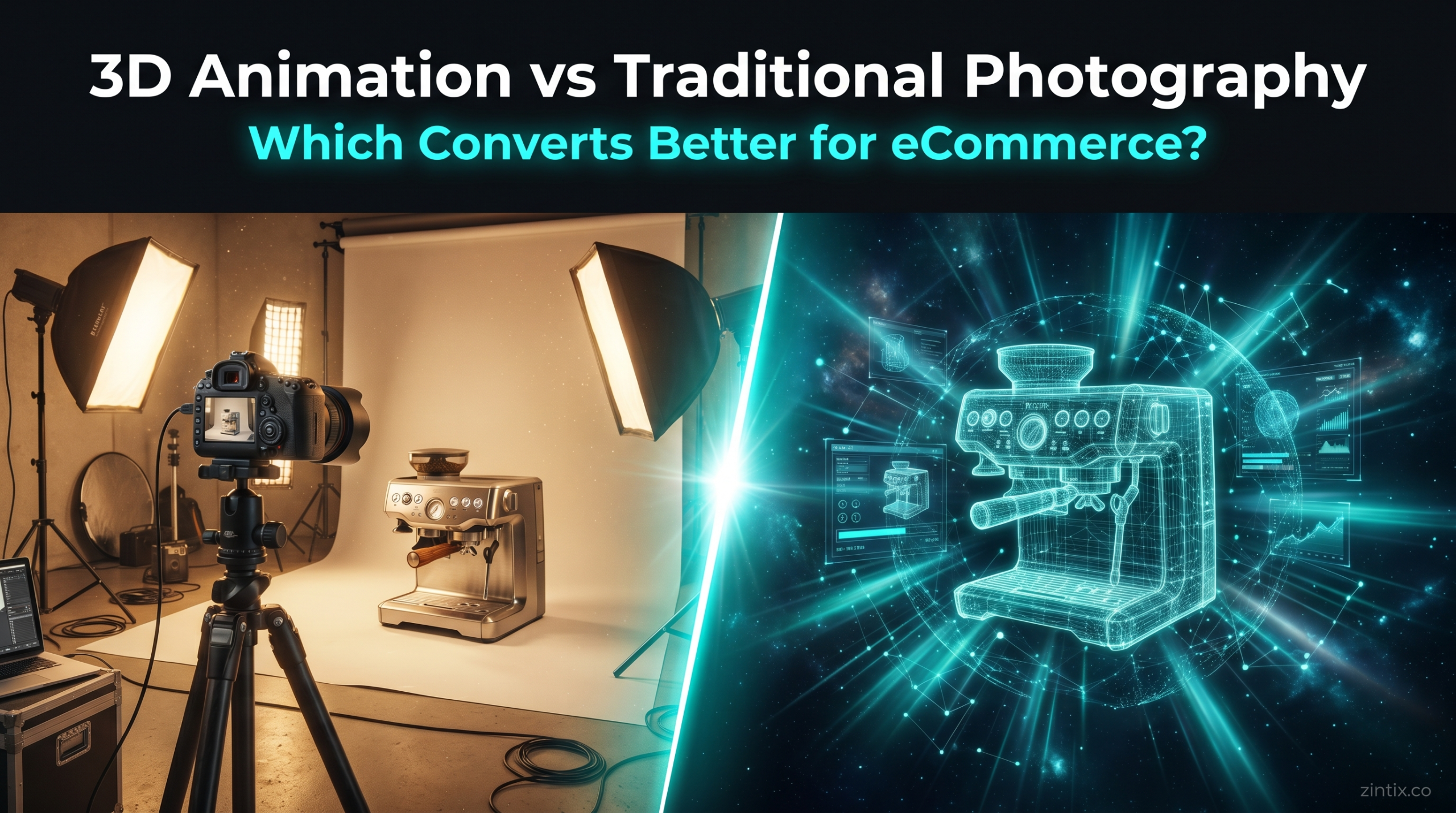
3D Product Animation vs. Traditional Photography: Which Converts Better?

Your product visuals are doing one of two things right now, building desire or killing it.
In eCommerce, there is no salesperson in the room. No one to answer questions, demonstrate features, or create an emotional connection. Your visuals carry that entire weight alone. And for most brands, the question is no longer whether to invest in great product visuals, it is which format delivers the best return.
3D product animation for eCommerce has exploded over the last three years. Brands that used to spend tens of thousands on traditional photography studios are now switching to CGI. Others swear that nothing beats a real photograph.
Both sides have a case. This article breaks it down honestly, costs, conversions, use cases, and which one is right for your brand right now.
What Is 3D Product Animation for eCommerce?
3D product animation uses computer-generated imagery to create photorealistic visuals and videos of your product, without ever placing a physical product in front of a camera.
A 3D artist builds a digital model of your product from technical drawings, reference photos, or CAD files. That model is then textured, lit, and rendered to look indistinguishable from a real photograph, or animated to show the product from every angle, demonstrate features, or create cinematic hero videos for product launches.
The output can be a single static render, a 360-degree spin, a full animated video, or an interactive AR experience. All from one digital asset. All without a single studio booking.
3D product animation uses computer-generated imagery to create photorealistic visuals and videos of your product, without ever placing a physical product in front of a camera.
A 3D artist builds a digital model of your product from technical drawings, reference photos, or CAD files. That model is then textured, lit, and rendered to look indistinguishable from a real photograph, or animated to show the product from every angle, demonstrate features, or create cinematic hero videos for product launches.
The output can be a single static render, a 360-degree spin, a full animated video, or an interactive AR experience. All from one digital asset. All without a single studio booking.
What Is Traditional Product Photography?
Traditional product photography places your physical product in front of a camera, in a studio or lifestyle setting, to capture real images for use across your eCommerce listings, website, ads, and marketing materials.
It is the standard that most brands have used for decades. Amazon built its marketplace on white-background product photography. Lifestyle shoots have driven conversion for fashion, beauty, and home goods brands for years.
The question is whether it is still the best option, or whether 3D product animation for eCommerce has caught up and, in many cases, overtaken it.
Head-to-Head: 3D Animation vs. Photography
Cost

Traditional photography involves studio rental, a photographer, lighting equipment, props, a stylist in some cases, post-production editing, and shipping your product to the shoot location. For a single product with multiple colorways and angles, costs can easily reach $1,500 to $5,000 per shoot, and every time you update the product or launch a new variant, you pay again.
3D product animation for eCommerce has a higher upfront cost for the initial model build — typically $500 to $2,500 depending on complexity. But once that 3D asset exists, producing new angles, colorways, environments, and animations costs a fraction of a new shoot. Your 3D model is a reusable asset that scales with your product line.
Winner for scaling brands: 3D animation.
Realism and Quality
Five years ago, CGI product visuals were detectable. Today, the gap has closed almost entirely. Professional 3D renders of products like electronics, furniture, cosmetics, and industrial equipment are routinely mistaken for photographs, even by industry professionals.
Where traditional photography still has an edge is in organic materials, fabrics, and food. The way light interacts with a handmade leather texture, the way a piece of clothing drapes on a real body, or the steam rising from a freshly plated dish, these are areas where a skilled photographer still produces results that CGI struggles to fully replicate.
Winner for organic materials and lifestyle shots: Traditional photography.
Winner for hard goods, electronics, furniture, and industrial products: 3D animation.
Flexibility and Speed
Launching a new colorway next week? With traditional photography, you are booking a studio, shipping samples, and waiting for edited files. With 3D animation, your team updates the material in the existing model and renders new images the same day.
Need to show your product in ten different environments, a living room, an office, a retail shelf, a white background? 3D gives you all ten without leaving your desk. Photography gives you one environment per shoot.
For brands with frequent product updates, large SKU catalogs, or global markets requiring different visual contexts, 3D product animation for eCommerce is not just more flexible, it is a completely different level of operational efficiency.
Winner for speed and flexibility: 3D animation — by a wide margin.
Conversion Rate Impact
This is what every eCommerce brand actually cares about. Do 3D product visuals convert better than photographs?
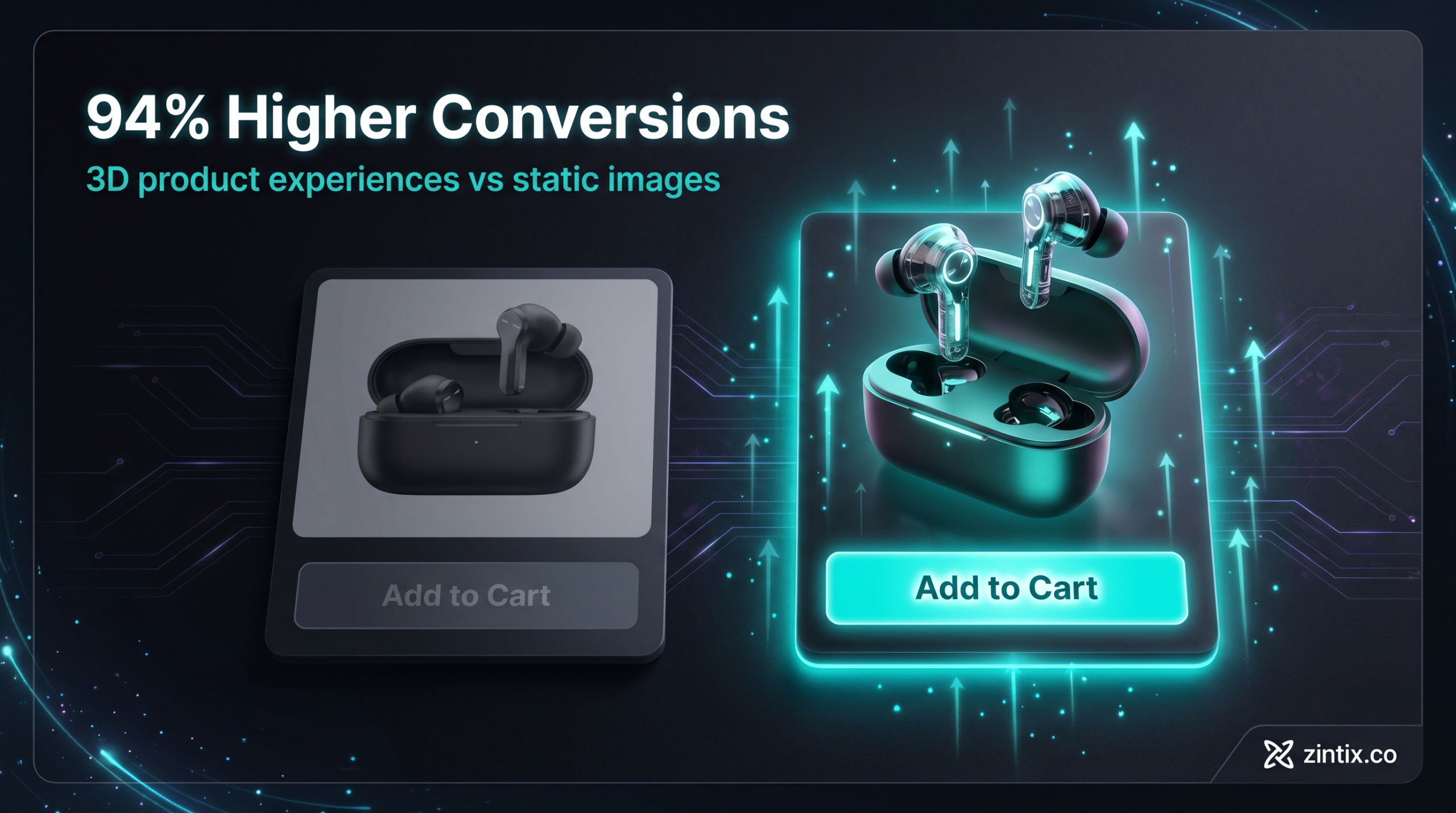
The data increasingly says yes, in the right context. Research from Shopify found that 3D and AR product experiences can increase conversion rates by up to 94% compared to standard product images. Studies from furniture and home goods brands show that customers who interact with a 3D product view are significantly less likely to return items, because the 3D experience sets more accurate expectations.
360-degree product animations on eCommerce listings consistently outperform static images in engagement time and add-to-cart rates, particularly for products where detail, dimension, and functionality matter.
That said, for categories where lifestyle context drives purchase decisions, fashion, food, wellness, a well-executed lifestyle photograph still creates emotional connection in a way that CGI currently struggles to match.
Winner for conversion on hard goods, tech, and furniture: 3D animation.
Winner for emotional, lifestyle-driven categories: Traditional photography.
Pre-Launch and Pre-Production Advantage
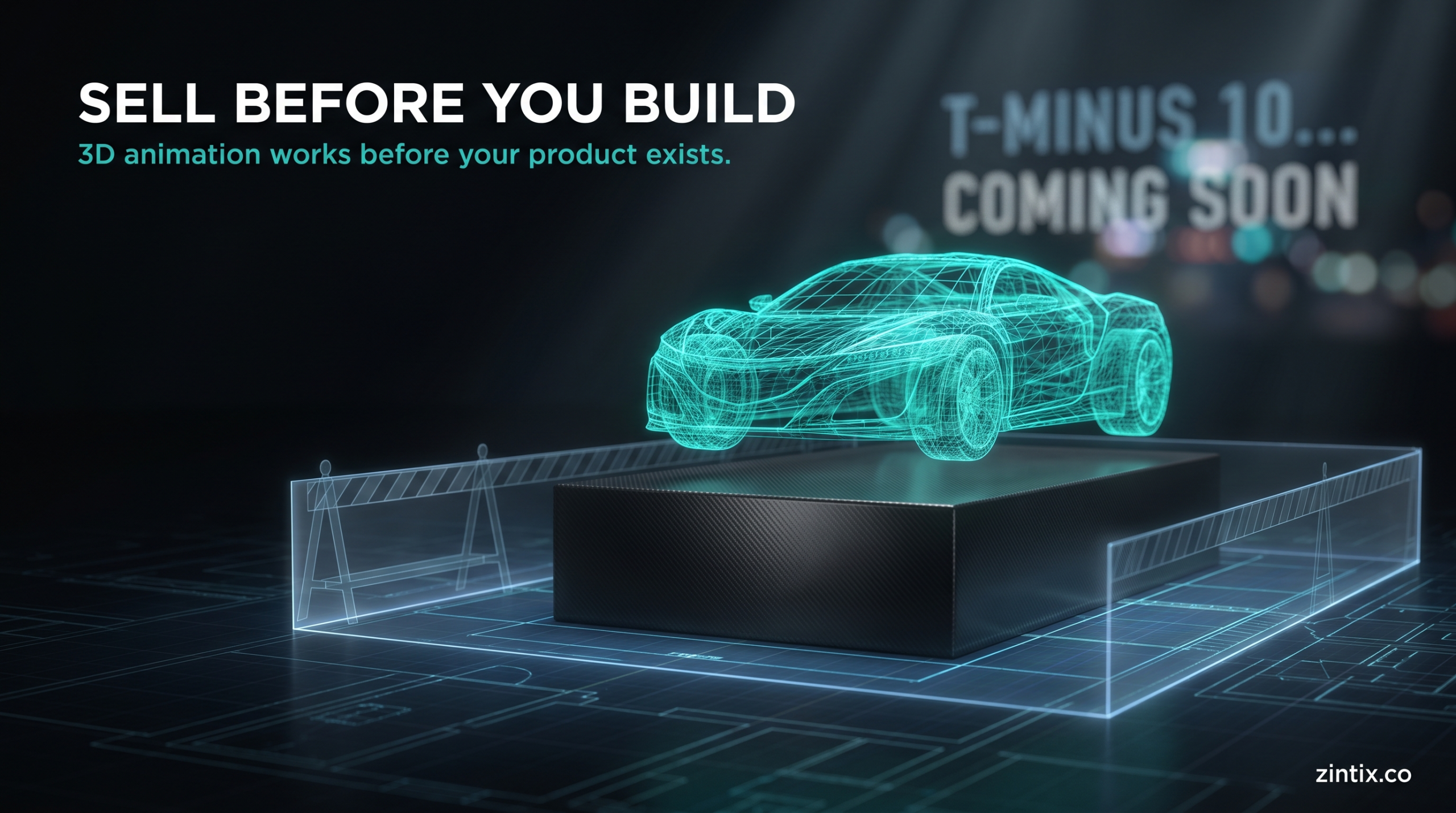
This is where 3D product animation for eCommerce has an advantage that photography simply cannot match.
If your product does not exist yet, it is in development, in manufacturing, or in pre-order, you cannot photograph it. But you can animate it. Brands routinely use 3D product animations to launch Kickstarter campaigns, build pre-order pages, pitch to retail buyers, and run ads before a single unit rolls off the production line.
This capability alone makes 3D animation a game-changing tool for product startups and eCommerce brands launching new lines.
Winner for pre-launch and pre-production: 3D animation — uncontested.
Which One Is Right for Your Brand?
The honest answer is that most growing eCommerce brands need both, used strategically.
Use 3D product animation for eCommerce for your hero product videos, 360-degree views, launch campaigns, new colorway rollouts, and AR experiences. Use traditional photography for lifestyle shoots where real human context matters, for social proof imagery, and for categories where organic texture is central to the buying decision.
If you are just starting out and choosing one, consider this: a strong 3D asset library scales with your brand in a way that photography cannot. Every product update, every new variant, every new market does not require a new shoot, it requires a render.
For brands in the USA launching on Amazon, Shopify, or direct-to-consumer — 3D product animation for eCommerce is increasingly the smarter long-term investment.
Zintix Creates 3D Product Animations That Sell
At Zintix, we create photorealistic 3D product animations for eCommerce brands and product companies across the USA, UK, and UAE. From 360-degree spins and exploded-view animations to full launch videos and lifestyle renders, we deliver the same quality you see from global brands, at a price point that makes sense for growing businesses.
Most single-product animation projects are completed in 5 to 7 business days. Every deliverable is optimized for the platform it lives on, whether that is an Amazon listing, a Shopify product page, a paid ad, or a social media campaign.
If you are ready to upgrade your product visuals and stop leaving conversions on the table, let’s talk.
Explore our 3D product animation services and see what we have created for brands like yours.
Zintix is a global B2B marketing and design agency serving businesses in the USA, UK, and UAE. Contact us to get started today.
FAQ Section — 3D Product Animation vs. Traditional Photography
Q1: Is 3D product animation more expensive than traditional photography?
A: Upfront, 3D product animation can cost slightly more for the initial model build, typically between $500 and $2,500 depending on product complexity. However, once your 3D asset exists, producing new colorways, angles, environments, and animations costs a fraction of booking a new photography studio. For brands with multiple SKUs or frequent product updates, 3D animation is significantly more cost-effective over time.
Q2: Can customers tell the difference between a 3D render and a real photograph?
A: For most product categories, electronics, furniture, cosmetics, industrial goods, and packaging, professional 3D renders are now virtually indistinguishable from photography. The technology has advanced to the point where even industry professionals struggle to tell them apart. The main area where photography still has a visible edge is in organic materials like fabrics, food, and handmade textures.
Q3: Does 3D product animation actually improve eCommerce conversion rates?
A: Yes — significantly. Research from Shopify found that 3D and AR product experiences can increase conversion rates by up to 94% compared to standard static images. Customers who interact with a 360-degree 3D view also return products less frequently because the immersive experience sets more accurate expectations about size, detail, and appearance.
Q4: How long does it take to produce a 3D product animation?
A: At Zintix, most single-product 3D animation projects are completed within 5 to 7 business days. Turnaround depends on product complexity, a simple packaged product takes less time than a detailed mechanical or furniture piece. Rush delivery is available for product launches with tight deadlines.
Q5: Can I use 3D product animation for Amazon and Shopify listings?
A: Absolutely. 3D animations and 360-degree spin videos are fully compatible with both Amazon and Shopify product listings. Amazon allows video uploads in the product gallery, and Shopify natively supports 3D model files for interactive AR experiences. Brands using 3D visuals on these platforms consistently report higher engagement, lower bounce rates, and improved add-to-cart rates compared to listings with static images only.
Written By :
Zaki
Post On :
May 23, 2026
Tags:
Product, Design, Content, Online, Photography, Markeitng, Digital Marketing, Animation