

B2b marketing AI is transforming our industry at breakneck speed. With 92% of companies already familiar with generative AI and more than 85% of B2B marketers using it beyond just content creation , we’re witnessing a fundamental shift in how marketing works. This transformation is happening while search behavior evolves too. More than a quarter of Americans (27%) now use AI chatbots like ChatGPT instead of traditional search engines .
Despite this rapid change, many B2B organizations still rely on outdated content approaches. However, the advantages of AI in B2B marketing are too significant to ignore. AI analyzes vast amounts of data instantly, identifying patterns and insights that would take humans significantly longer to discover . In fact, with natural language processing and machine learning algorithms, AI produces high-quality, relevant content in a fraction of the time it would take a human writer . This is why content marketing matters more than ever in the age of AI, but requires evolution to stay competitive.
In this article, we’ll explore how AI is making traditional B2B content obsolete and what you need to do to stay ahead in 2025.
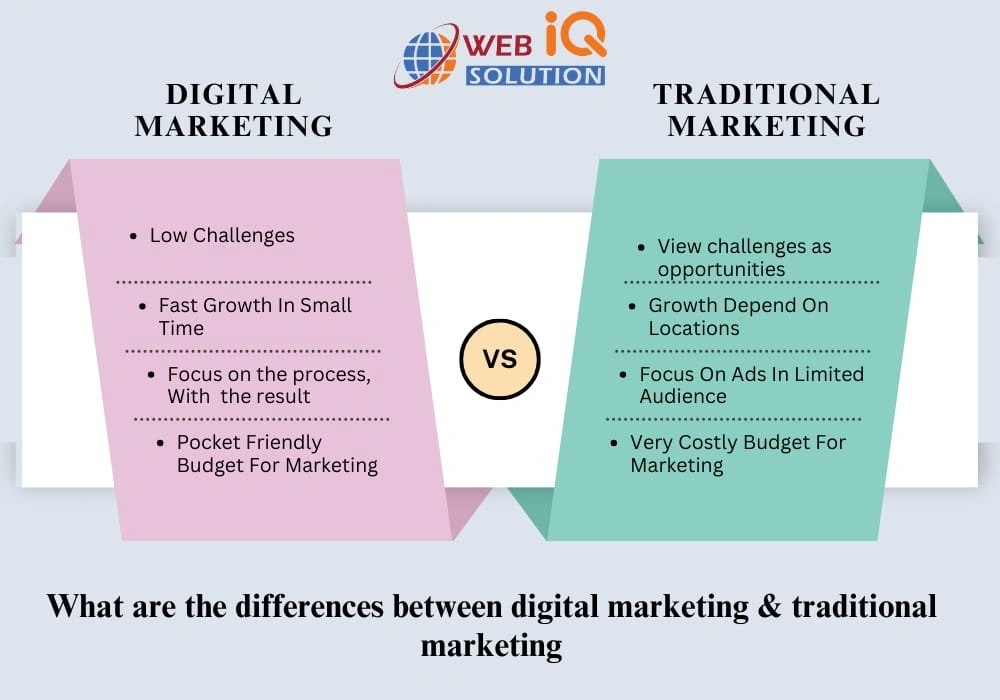
The content marketing landscape is undergoing a fundamental transformation. A staggering 58% of B2B marketers now rate their content strategy as merely “moderately effective,” with nearly half citing a lack of clear goals as the primary reason. This lackluster performance signals a crucial reality: what worked yesterday simply doesn’t cut it today.
Traditional marketing approaches are increasingly misaligned with how modern B2B buyers make decisions. Currently, 70% of the B2B purchasing process occurs digitally before a buyer even contacts a sales representative. Furthermore, the demographic makeup of decision-makers has dramatically shifted, with Millennials and Gen Z now representing more than 70% of B2B buyers.
These digital natives approach purchasing decisions differently than their predecessors. They conduct thorough online research, compare options independently, and typically consume 13 pieces of content before making a final decision. Additionally, modern B2B buyers expect experiences that mirror their consumer lives – 82% now demand the same level of speed, ease, and personalization they receive as consumer.
As a result, B2B marketing AI solutions must adapt to meet these evolving expectations. Today’s buyers seek transparency, personalization, and frictionless experiences throughout their journey.
One of the most common mistakes companies make is applying a “one-size-fits-all” approach to their marketing efforts. This outdated strategy uses mass marketing techniques and identical messaging for everyone, failing to acknowledge the diverse needs of different audience segments.
Static content presents several critical limitations in today’s dynamic marketplace:
Moreover, according to recent studies, interactive content generates 2x more conversions and 4-5x more page views compared to static content. Given that 87% of marketers confirm interactive content excels at capturing and maintaining engagement, the limitations of static approaches become even more apparent.
Despite these challenges, content marketing remains essential, perhaps now more than ever. Nevertheless, it requires significant evolution to meet current demands. The biggest obstacle? A persistent lack of resources, cited by 54% of marketers as their primary non-creation challenge.
Other major hurdles include measuring results (47%) and aligning content with the buyer’s journey (45%). Perhaps most telling, 55% of marketers struggle with creating content that actually prompts desired actions from their audience.
The future of effective B2B content marketing lies in personalization and audience-centricity. Marketers who prioritized personalization were 215% more likely to report that their 2023 marketing strategies were “very effective” compared to those who didn’t.
Looking ahead, content marketing is trending toward becoming more targeted, purposeful, and customer-centric. The focus is shifting from product promotion to audience enrichment, creating meaningful experiences that resonate with specific segments rather than generic messages aimed at everyone.
For B2B organizations to succeed with content marketing in 2025 and beyond, they must move beyond traditional approaches and embrace AI-powered strategies that deliver the personalization, relevance, and engagement that modern buyers demand.
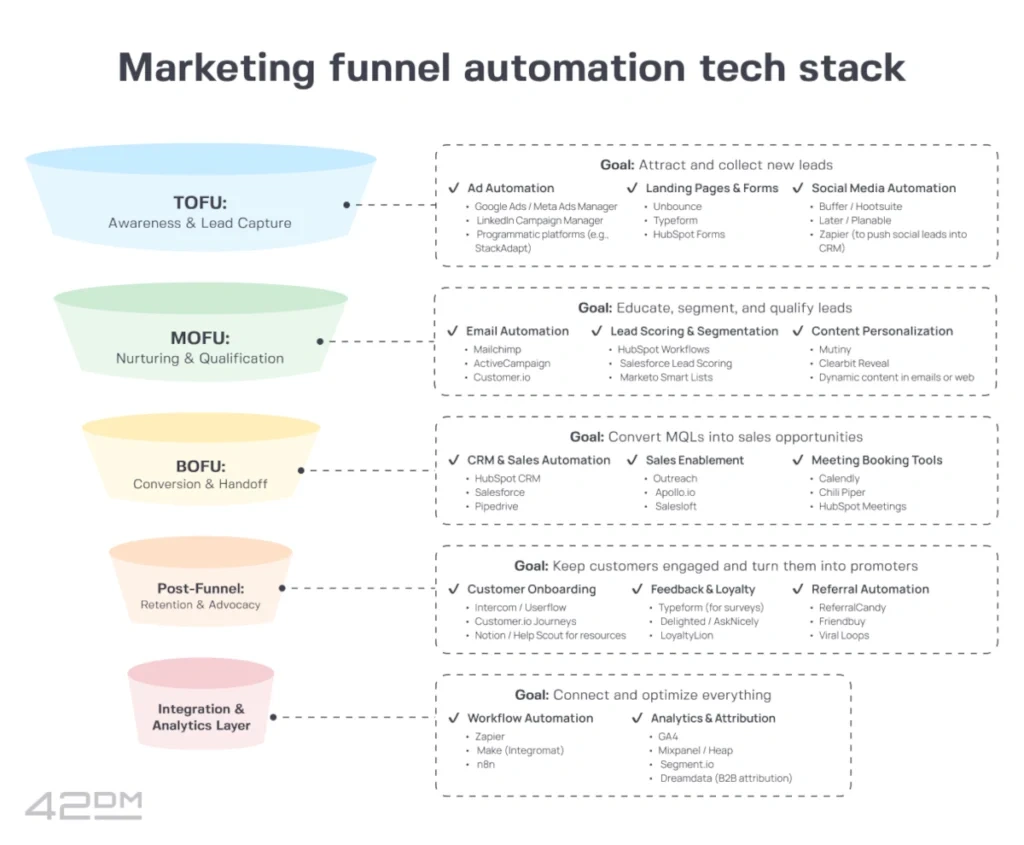
The traditional B2B content funnel is undergoing a profound transformation as artificial intelligence redefines every stage of the buyer journey. AI technologies now enhance how potential customers discover, evaluate, and ultimately decide to purchase products or services.
At the top of the funnel, AI has revolutionized how B2B buyers find relevant content. Advanced predictive analytics now assess behaviors, demographics, and engagement patterns, allowing brands to refine targeting strategies and identify high-intent customers. Natural Language Processing (NLP) simultaneously enables real-time social listening and sentiment analysis, helping marketers gage public perception and emerging trends.
Content discovery, a critical component of good digital experiences has been completely reinvented through AI. Nearly 90% of customers say they’ll pay more for a better customer experience when it’s easy to find what they’re looking for. Today’s AI-powered content discovery tools enhance this process by:
James Anderson, VP of growth and innovation at Geben Communication, notes that “AI helps build personas that align deeply with audience interests, pain points and behaviors, insights unattainable through manual processes by analyzing large datasets like social media trends, comments and demographics”.
Once prospects enter the consideration phase, AI transforms passive content into dynamic experiences. Currently, over 70% of B2B buyers demand personalized buying experiences from sellers and vendors. To meet these expectations, AI-powered machine learning refines this stage by delivering personalized content recommendations and dynamically adapting website experiences based on each visitor’s behavior.
Consequently, B2B marketers can now deliver hyper-personalization at scale. AI systems analyze user behavior, purchase history, and content interaction to provide customized recommendations. Platforms like PathFactory and Uberflip use AI to dynamically serve content based on visitor profiles and their stage in the buyer journey.
This level of personalization yields impressive results. For instance, one cybersecurity firm implemented AI-powered personalization to showcase relevant whitepapers and case studies to different audience segments, subsequently increasing lead conversion rates by 30%. Equally important, AI chatbots and virtual assistants now provide instant responses, guiding potential customers through the decision-making process while collecting valuable behavioral insights.
When prospects reach the decision stage, AI provides the critical support needed to convert interest into action. At this point, AI optimizes conversions by automating A/B testing for landing pages, emails, and ad creatives, ensuring only the highest-performing versions reach users. Additionally, predictive pricing models adjust product costs in real-time based on demand and competition.
Furthermore, AI significantly accelerates the sales cycle by automating critical tasks in lead qualification and nurturing. It handles lead scoring and gages each prospect’s readiness to buy, ensuring that sales reps concentrate on high-priority leads with the strongest conversion potential.
For commerce brands specifically, AI at the decision stage helps win deals by surfacing the most relevant case studies, testimonials, and third-party reviews for the buyer’s industry or use case. AI can also automate proposal and contract creation, ensuring accuracy, compliance, and speed, making it easier for buyers to say “yes”.
Essentially, AI doesn’t just make marketing more efficient; it’s redefining how trust is built and decisions are made. In B2B, the brands that make buying effortless through intelligent AI implementation will be the ones that ultimately win.
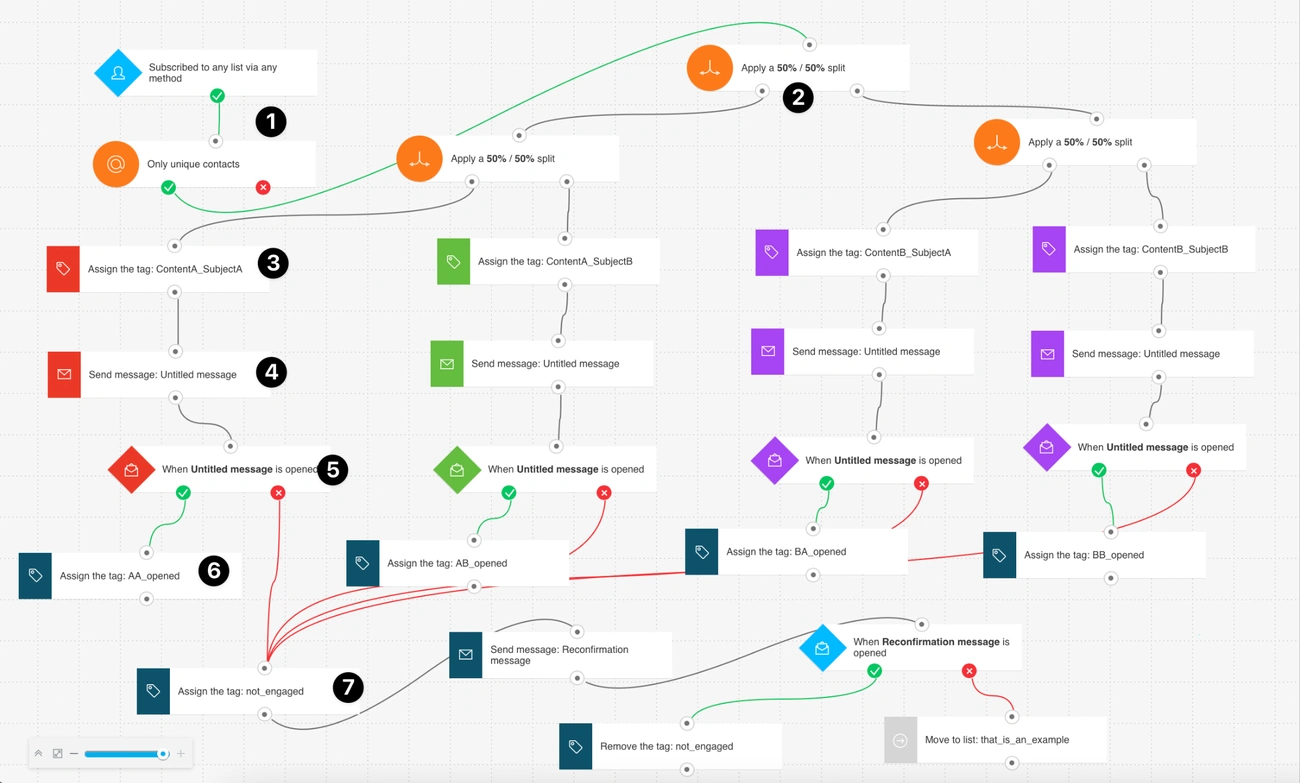
Smart businesses are now deploying B2B marketing AI automation across various marketing functions with remarkable results. Let’s examine how these AI-powered systems operate in real-world scenarios.
AI has fundamentally changed how B2B marketers approach email campaigns. Today’s AI-powered email systems predict the optimal time to send messages to each recipient, craft effective subject lines, and personalize content based on previous interactions. This personalization isn’t static, these systems continuously adapt to recipient behavior.
Modern email sequences respond intelligently to user activity, creating a seamless experience from first touch to conversion. Rather than sending predetermined messages on a fixed schedule, AI-driven systems recalibrate the entire sequence when they detect replies, ensuring future communications remain contextually relevant. This real-time adaptation prevents awkward follow-ups and maintains meaningful conversations with prospects.
Furthermore, marketers can set specific conditions for email sequence continuance. For instance, the system can automatically halt messages if a contact’s status changes from “prospect” to “customer,” guaranteeing communications stay relevant to the buyer’s current journey stage.
Perhaps most impressively, AI now delivers highly relevant content at precisely the right moment in the buying cycle. These recommendation systems analyze data from sales interactions to suggest appropriate materials without requiring manual searches. Benefits include:
According to McKinsey research, this level of personalization drives a 10-15% revenue increase for businesses. This advantage is particularly valuable considering sales representatives typically spend 440 hours yearly searching for appropriate content to share with prospects. Without AI assistance, approximately 70% of marketing content goes unused, despite 95% of B2B buying decisions being directly influenced by content.
Beyond content delivery, AI now streamlines testing and optimization processes. Automated A/B testing platforms handle audience segmentation, variation setup, and result analysis with minimal human intervention. This automation enables businesses to run multiple tests simultaneously, accelerating the optimization process.
AI testing tools analyze large data sets quickly, making decisions based on predefined criteria to ensure accurate targeting. The technology delivers real-time results, allowing teams to act immediately, whether by adjusting tests, pausing underperforming variations, or scaling successful approaches.
Ultimately, automated A/B testing helps companies deliver tailored experiences based on actual user data rather than assumptions, substantially improving conversion rates and engagement.
As businesses rush to implement b2b marketing AI, many fall into predictable traps that undermine their efforts. Understanding these common pitfalls is crucial for developing effective AI strategies that deliver genuine value rather than merely following trends.
Depending too heavily on unrefined AI content leads to mediocrity. Research shows AI-generated content often lacks originality and thought leadership, producing what scientists call “Model Autophagy Disorder” (MAD) – where quality dramatically decreases as AI feeds on AI-produced material. Without proper guidance, AI typically generates formulaic approaches with bland ideas and instantly recognizable syntax.
Perhaps the most dangerous pitfall involves neglecting human supervision. AI systems can produce factual errors or “hallucinations,” particularly with data after 2021. In fact, hallucination rates vary widely among AI models, with even the best systems reaching a 15% error rate. Effective AI implementation requires what experts call a “trust but verify” approach – rigorously checking AI-generated material before publication.
One-off AI training inevitably leads to stale, repetitive content that fails to engage target audiences. Studies indicate AI-driven content creation often contributes to the homogenization of creative expression. Without proper training, AI struggles to capture authentic brand personality – yet 95% of B2B buying decisions are directly influenced by content. Businesses must provide clear inputs, tone guidance, and sample copy when prompting AI tools.
Although AI enables faster content creation, B2B organizations must still optimize for discoverability. Currently, only 11% of US B2B marketers prioritize SEO spending. Furthermore, AI-generated overviews appearing directly in search results may reduce website click-through rates. To counter this, content must be structured with clear formatting and credibility signals that help AI systems understand and prioritize your material.
Throughout these challenges, remembering that AI serves as an assistant rather than replacement ensures your b2b marketing efforts maintain the human touch that drives real business results.
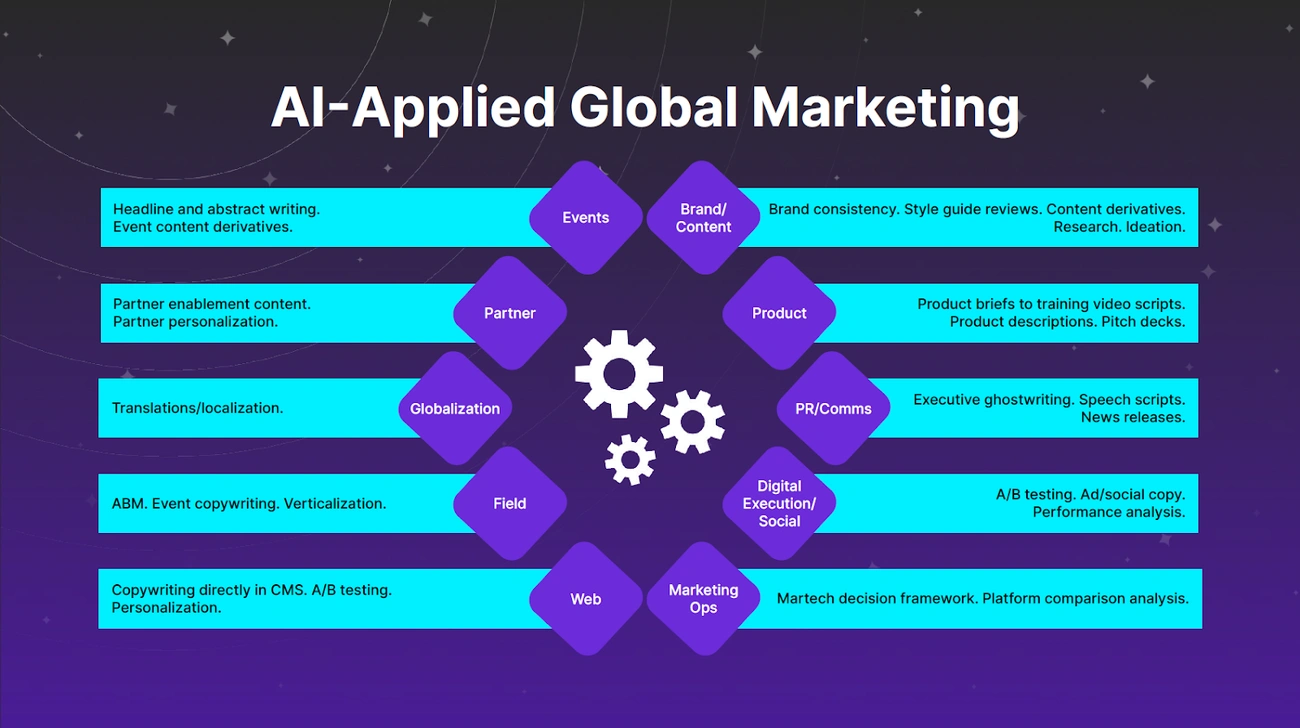
Creating a successful b2b marketing ai strategy requires methodical planning rather than hasty implementation. Today’s forward-thinking companies are developing comprehensive approaches that leverage AI while maintaining the human elements that drive meaningful engagement.
Successful AI implementation begins with clear objectives. According to Adobe Summit 2025 sessions, companies must identify what’s holding their brand back from “creating content at the speed of relevance”. Start by pinpointing core business challenges like lead acquisition or account management. Once priorities are established, determine whether AI or other technologies best address these needs. Remember, not every process requires generative AI, sometimes simpler automation suffices.
Effective integration means embedding AI throughout your content production cycle. Indeed, AI should enhance your editorial process at every stage, from research and ideation to distribution. Consider implementing AI-powered tools for audience research, keyword analysis, brief creation, and content optimization. Notably, for B2B organizations, the sweet spot for AI integration is repetitive work that still requires intelligence and nuance.
Balance automation with human creativity
The most effective AI strategies view technology as an assistant rather than a replacement. Throughout industry studies, findings consistently show that while “AI can handle repetitive tasks… it often lacks the nuanced understanding, emotional depth, and cultural context that human designers bring to their work”. Therefore, encourage teams to adopt what experts call a “transformational mentality” that sees AI as a collaborative tool.
Measuring AI’s impact requires specific metrics tailored to your goals. Firstly, establish clear KPIs aligned with business objectives, these might include:
McKinsey research emphasizes the importance of “test-and-learn cycles rooted in seller feedback and continuous refinement”. Hence, regularly analyze performance data to identify patterns and refine your approach accordingly.
AI technology has fundamentally altered the B2B marketing landscape, rendering traditional content approaches increasingly obsolete. Throughout this article, we’ve seen how modern buyers demand personalized experiences, with 70% of the purchasing process now occurring digitally before any sales contact. AI addresses these evolving expectations through enhanced personalization, data-driven insights, and streamlined workflows.
The transformation affects every stage of the buyer journey. AI now powers smarter discovery during the awareness stage, delivers personalized nurturing during consideration, and provides real-time engagement during the decision phase. Companies that embrace these capabilities gain significant advantages over competitors clinging to outdated methods.
Nevertheless, successful AI implementation requires careful planning. Many organizations fall into predictable traps when rushing AI adoption, particularly over-reliance on generic output, insufficient human oversight, neglect of brand voice, and poor SEO optimization. These pitfalls undermine effectiveness and potentially damage brand credibility.
The path forward demands a balanced approach. Forward-thinking companies define clear AI objectives, integrate AI throughout their content workflows, maintain human creativity alongside automation, and continuously measure performance. This hybrid strategy preserves what makes content truly compelling, human insight and emotional connection, while leveraging AI’s remarkable efficiency.
Undoubtedly, B2B marketers who master this balance will thrive in 2025 and beyond. The question no longer centers on whether to adopt AI for content marketing but rather how thoughtfully you implement it. Organizations that view AI as a collaborative tool rather than a replacement for human creativity will create more relevant, engaging content that meets the sophisticated demands of today’s B2B buyers. AI doesn’t diminish the importance of content marketing, it actually makes exceptional content more crucial than ever before.
Ready to partner with an agency that covers it all? Contact Zintix today and discover how our comprehensive B2B marketing services can transform your pipeline.
Book a Free Strategy Call or visit our full B2B Marketing Agency page.
B2B marketing AI is revolutionizing how companies create and deliver content, making traditional static approaches increasingly ineffective. Here are the essential insights for staying competitive in 2025:
The future belongs to B2B marketers who view AI as an enhancement tool rather than a replacement, creating more relevant and engaging content that meets sophisticated buyer demands while preserving the human elements that drive meaningful connections.
Q1. How is AI changing B2B content marketing?
AI is transforming B2B content marketing by enabling personalized experiences, data-driven insights, and streamlined workflows. It powers smarter content discovery, delivers personalized nurturing, and provides real-time engagement throughout the buyer’s journey.
Q2. What are the risks of over-relying on AI-generated content?
Over-reliance on AI can lead to generic, formulaic content lacking originality and thought leadership. It may also result in factual errors or “hallucinations,” especially with recent data. Human oversight and fact-checking remain crucial for maintaining quality and accuracy.
Q3. How can B2B marketers balance AI automation with human creativity?
Successful B2B marketers view AI as a collaborative tool rather than a replacement for human creativity. They use AI to handle repetitive tasks and data analysis while relying on human expertise for nuanced understanding, emotional depth, and cultural context in content creation.
Q4. What metrics should be tracked when implementing AI in B2B marketing?
Key metrics to track include content production time and quality, engagement and conversion rates, cost-per-piece analysis, and time and resources saved through automation. It’s important to align these metrics with specific business objectives and continuously refine the approach based on performance data.
Q5. Why is personalization crucial in B2B marketing today?
Personalization has become essential in B2B marketing because modern buyers expect consumer-level experiences. With 82% of B2B buyers demanding personalized interactions and 70% of purchasing happening digitally, AI-powered personalization is key to gaining a competitive advantage and meeting sophisticated buyer demands.
Zaki
Jul 12, 2025
Agency, Tactics, design, Content, Online, SMM, Video, Markeitng
