
Marketing used to be a discipline of campaigns: you planned, you executed, you measured, you repeated. AI changed the speed. Agentic AI is changing the entire model.
In 2026, the most competitive brands aren’t just using AI as a content shortcut. They’re deploying intelligent AI agents that set goals, use tools, make decisions, and optimize results, autonomously. This is the shift from automation to autonomy, and it’s the most significant structural change in digital marketing in the last decade.
Whether you’re a B2B startup, a digital agency, or a growth-stage company, understanding agentic AI isn’t optional anymore. In this guide, we’ll break down exactly what it is, why it matters, how leading brands are using it, and what you need to do now to stay competitive.
Most marketers are familiar with generative AI: you give it a prompt, it produces an output. Agentic AI operates at a fundamentally higher level. Instead of responding to a prompt, an AI agent receives a goal, and independently determines the sequence of actions, tools, and decisions needed to achieve it.
Think of the difference this way:

![]()
With that goal set, the agent will monitor CRM data, identify high-intent signals, personalize outreach sequences, A/B test messaging, reallocate budget toward what converts, and brief the sales team — without being asked for each step.
▸ Goal-Driven: Perceives its environment (analytics, CRM, social listening, ad performance)
▸ Multi-Step: Takes multi-step actions across tools and platforms independently
▸ Adaptive: Corrects course based on real-time performance feedback
▸ Collaborative: Can collaborate with other specialized agents in a larger system
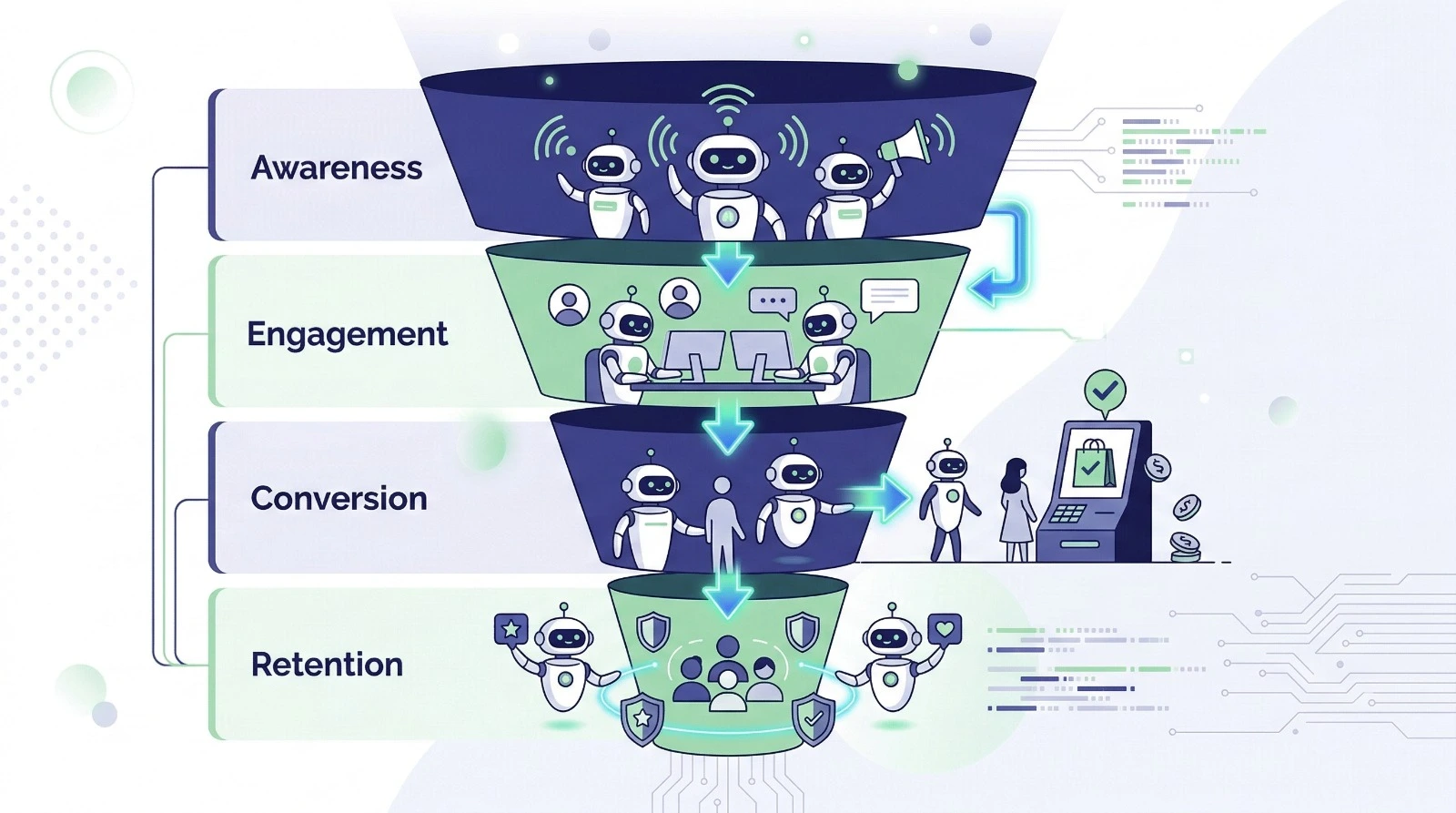
The timing isn’t accidental. Three major forces converged in 2025–2026 to make agentic marketing viable at scale:
Large language models crossed a threshold where they could plan coherently across multi-step tasks with low error rates. This made delegating complex, judgment-intensive work — like campaign strategy or audience segmentation — genuinely safe for production environments.
Most major platforms — HubSpot, Salesforce, Meta Ads, Google Analytics 4, Klaviyo — now expose robust APIs that AI agents can interface with directly. This means agents can actually act across your real tools, not just simulate actions.
With Gartner projecting a 25% decline in traditional organic search volume by 2026 due to AI-powered search engines, the imperative to optimize for AI citation — not just Google ranking — has made intelligent, always-on content agents a strategic necessity.

Rather than manually coordinating email, paid media, social, and CRM workflows, agentic systems accept a business objective and handle execution. Meta has announced plans to ship tools that build and optimize entire ad campaigns from a product description and budget alone. Early adopters report 40–70% reductions in campaign management time. B2B digital marketing agency
Agentic AI continuously monitors individual behavioral signals, pages visited, emails opened, time spent, support tickets raised, and adapts messaging, content format, and timing dynamically. This moves personalization from “three audience segments” to truly individual experiences at scale.
Content agents now research trending topics, identify semantic keyword gaps, generate SEO-optimized drafts, and monitor ranking changes, then update older posts autonomously to protect search equity. For B2B digital agencies like Zintix, this creates a compounding content flywheel that grows organic traffic without proportional headcount growth.
Networks of specialized agents can monitor competitor content, ad creative, pricing changes, and social sentiment in real time — surfacing insights that would take a human analyst days to compile. The output is a standing intelligence brief your team can act on immediately.
Agentic AI agents handle the entire top-of-funnel qualification process: qualifying inbound leads, booking discovery calls, sending personalized follow-up sequences, and scoring prospects, passing only sales-ready leads to human closers. Land base reported a 7x improvement in conversion rates using this model.
Agentic AI is not consequence-free. Gartner predicts over 40% of agentic AI initiatives will stall before completion, not because the technology fails, but because of poor governance, misaligned incentives, and uncontrolled costs. Before deploying agents, your organization needs to establish three pillars:
▸ Human-in-the-Loop Protocols: Define what decisions agents can make independently vs. what requires human approval
▸ Agent Action Logging: Mandate full logs of agent actions, tool calls, and decision rationale for auditability
▸ Budget Guardrails: Set hard cost ceilings on API calls, ad spend adjustments, and content publishing per agent per day
Brand safety is the other major concern. As AI agents generate and publish content autonomously, the potential for off-brand messaging, factual errors, or inadvertent compliance violations increases substantially. Human editorial review, even at a spot-check level, remains non-negotiable.

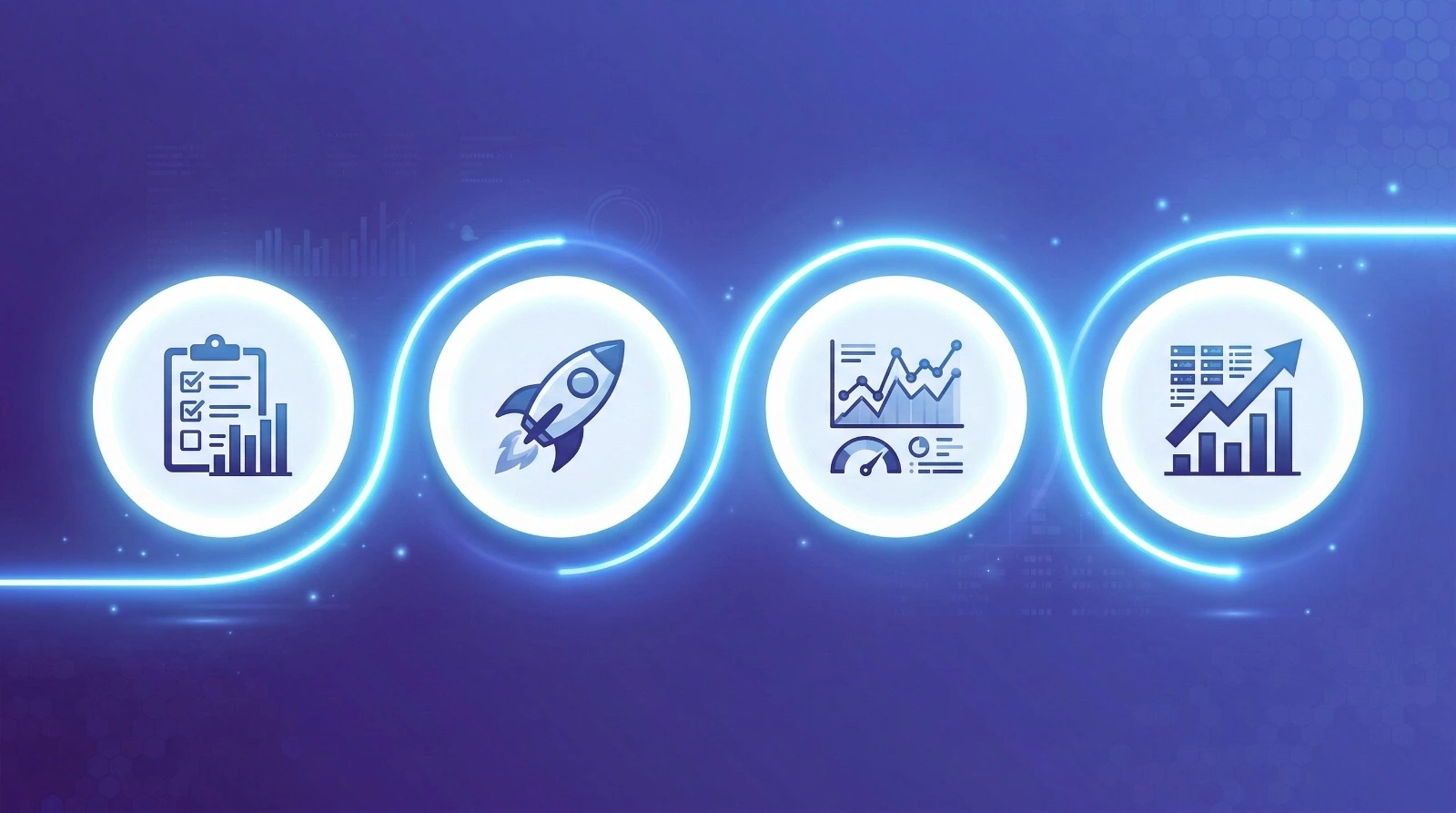
You don’t need a seven-figure martech budget to get started. The most successful early adopters started narrow and measured obsessively:
Step 1 — Audit Your Data Infrastructure
Agentic AI is only as good as the data it can access. Before deploying agents, audit your CRM quality, ad tracking setup (post-iOS 17 attribution), and GA4 event taxonomy. Garbage in, garbage out — at autonomous scale.
Step 2 — Run a Single-Use-Case Pilot
Pick one use case with measurable KPIs: content atomization, competitive intelligence, or lead qualification. Resist the temptation to deploy across all channels simultaneously.
Step 3 — Measure Incremental Lift
Compare agent-driven results against a control group. What matters: time saved, conversion rate improvement, cost per acquisition change, and organic traffic impact. Document it rigorously.
Step 4 — Expand to Multi-Agent Architecture
Once one agent is proven, introduce complementary agents that can collaborate, a content agent feeding a distribution agent feeding a performance analytics agent. This is where compounding returns kick in.
The best marketers of the agentic era won’t be the ones who know how to prompt AI. They’ll be the ones who know how to orchestrate systems, setting vision, defining constraints, and evaluating outcomes with a strategic lens that no AI can replicate.
Agentic AI doesn’t replace the marketer. It amplifies the ones who know how to use it. The brands winning in 2026 aren’t the largest, they’re the most adaptive.
At Zintix, we help B2B businesses navigate exactly this kind of strategic shift, combining digital marketing strategy, SEO, and cutting-edge AI tools to drive sustainable growth.
Ready to build your agentic marketing strategy? Let’s talk.
Want more insights? Read our latest blog posts here!
Read our Recent Blogs:
How to Master Digital Marketing for Small Business on a Tight Budget
Why AI is Changing B2B Marketing and Leaving Traditional Content Behind in 2025
Agentic AI in marketing refers to AI systems that can independently plan, execute, and optimize marketing tasks, such as campaign management, content creation, and lead qualification, without requiring step-by-step human instruction. Unlike generative AI that responds to prompts, agentic AI pursues defined business goals autonomously.
Traditional marketing automation follows pre-set rules and workflows (e.g., if X then Y). Agentic AI can reason about novel situations, adapt to new data, use multiple tools in sequence, and make judgment calls, making it far more flexible and capable of handling complex, dynamic marketing environments.
The main risks include brand safety exposure, uncontrolled spend, compliance violations, and over-reliance on AI decision-making without human oversight. Establishing governance protocols, audit logs, and budget guardrails before deployment is essential.
Yes. Many agentic AI tools are now accessible via SaaS platforms without requiring in-house AI engineering. Starting with a single, focused pilot, such as a content atomization agent or a lead qualification bot, is the recommended approach for smaller teams.
Zaki
Mar 9, 2026
Agency, Tactics, design, Content, Online, SMM, Video, Markeitng, digital marketing, SEO